
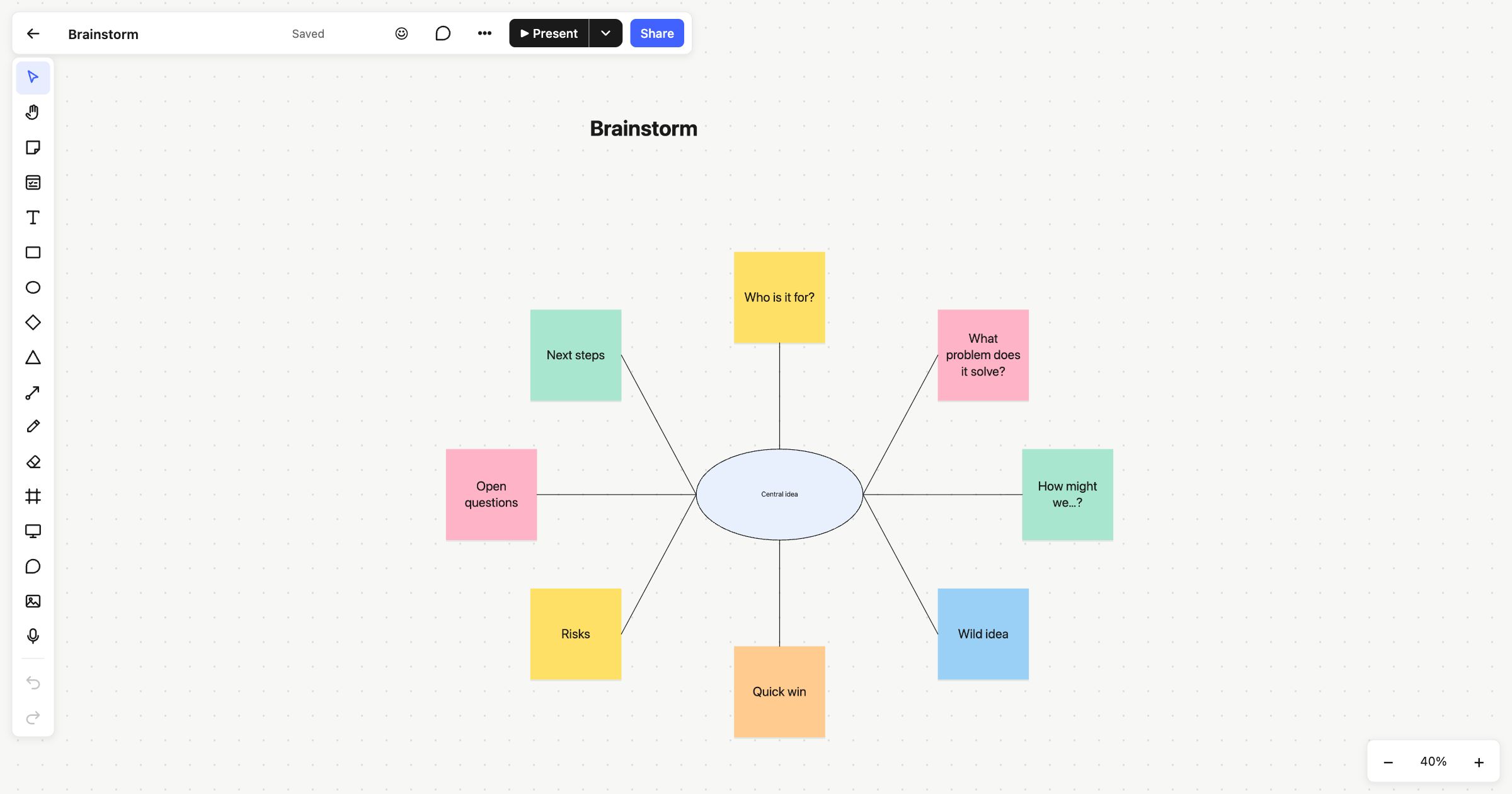
Brainstorming is about getting lots of ideas down quickly, before anyone starts judging them. Sticky notes are good at this because nobody’s precious about them. This brainstorming template puts a central idea in the middle of the board, with eight prompts around it to get people writing, whether you’re working alone or with a group.
When to use a brainstorming template
Use it at the start of something: a new product, a campaign, a workshop topic, or a problem the team keeps coming back to. It suits the moment when you need options rather than answers. The prompts help when a blank board feels like too much, and the board is infinite, so you never run out of room as the ideas pile up.
How to run it
- Write the central idea (2 minutes). Replace “Central idea” with the question or topic, phrased as plainly as you can.
- Go wide (10 minutes). Add sticky notes around the prompts. One idea per note. Quantity matters more than quality here, so don’t stop to discuss.
- Read them out (5–10 minutes). Go round the board and let people explain their notes. Add new ones as they come up.
- Cluster (10 minutes). Drag similar notes together. Draw a frame around a cluster and give it a title.
- Pick the best (5 minutes). Vote on the ideas worth following up, then write the winners under “Next steps”.
What’s on the template
The board is titled “Brainstorm”. In the middle is an ellipse labelled “Central idea”. Around it, joined by connector lines, are eight coloured sticky notes with prompts:
- “Who is it for?”
- “What problem does it solve?”
- “How might we…?”
- “Wild idea”
- “Quick win”
- “Risks”
- “Open questions”
- “Next steps”
Keep the prompts that help and delete the rest. Connectors stay attached to the notes they join, so you can move notes around and the lines follow.
Tips
- Time the quiet part. Start the shared timer for five minutes so everyone writes before anyone talks.
- Vote to narrow down. Votes stay hidden until the vote ends, so people aren’t swayed by each other. Add results to the board writes the counts down for later.
- Turn ideas into work. When an idea becomes a task, add a card beside it with a checklist. The post From blank board to a task list walks through it.
Read more about sticky notes in Atomic Lab. When you’ve got a pile of notes to make sense of, try the affinity diagram template, or branch an idea out further with the mind map template.
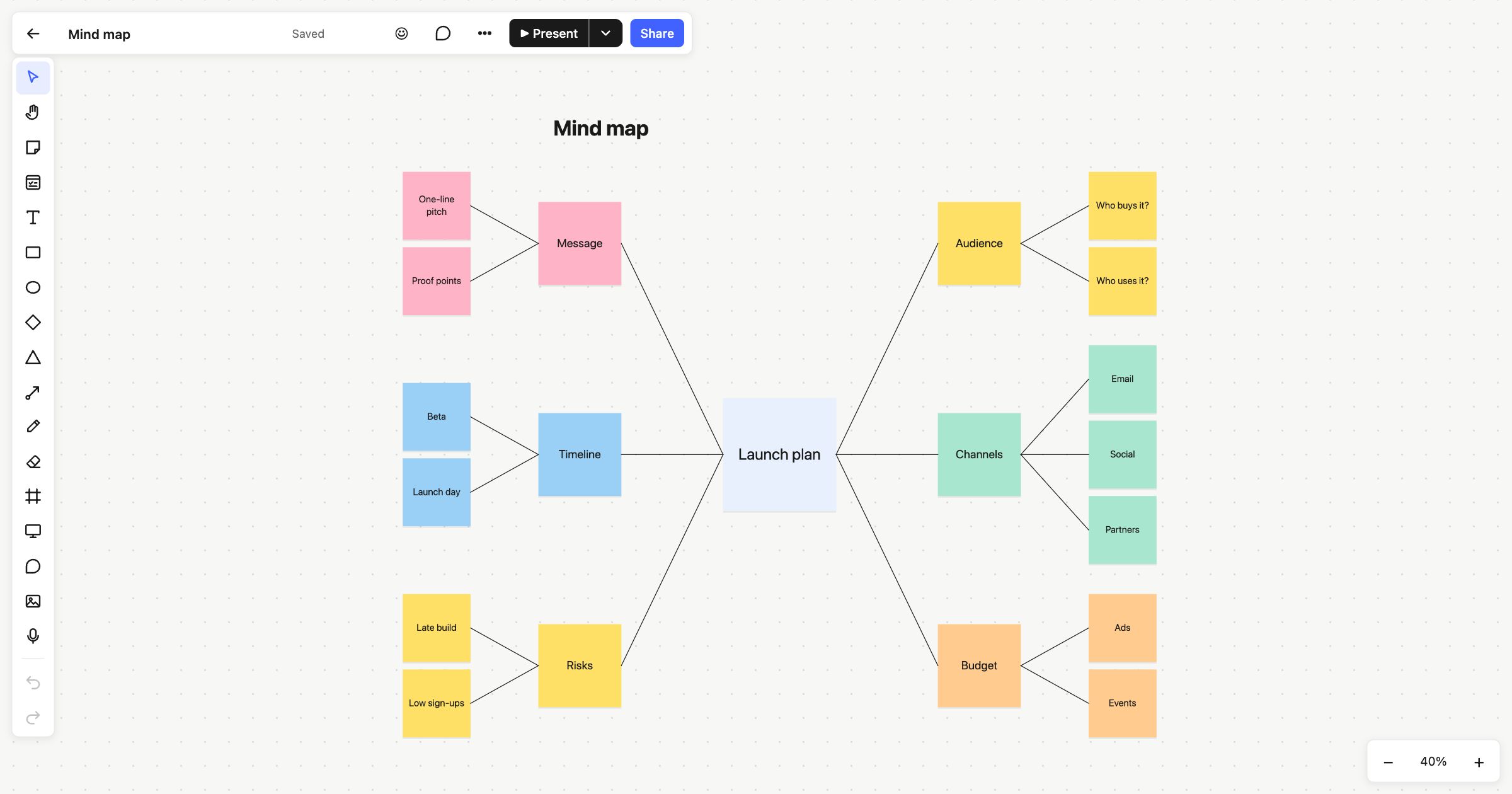 Mind map
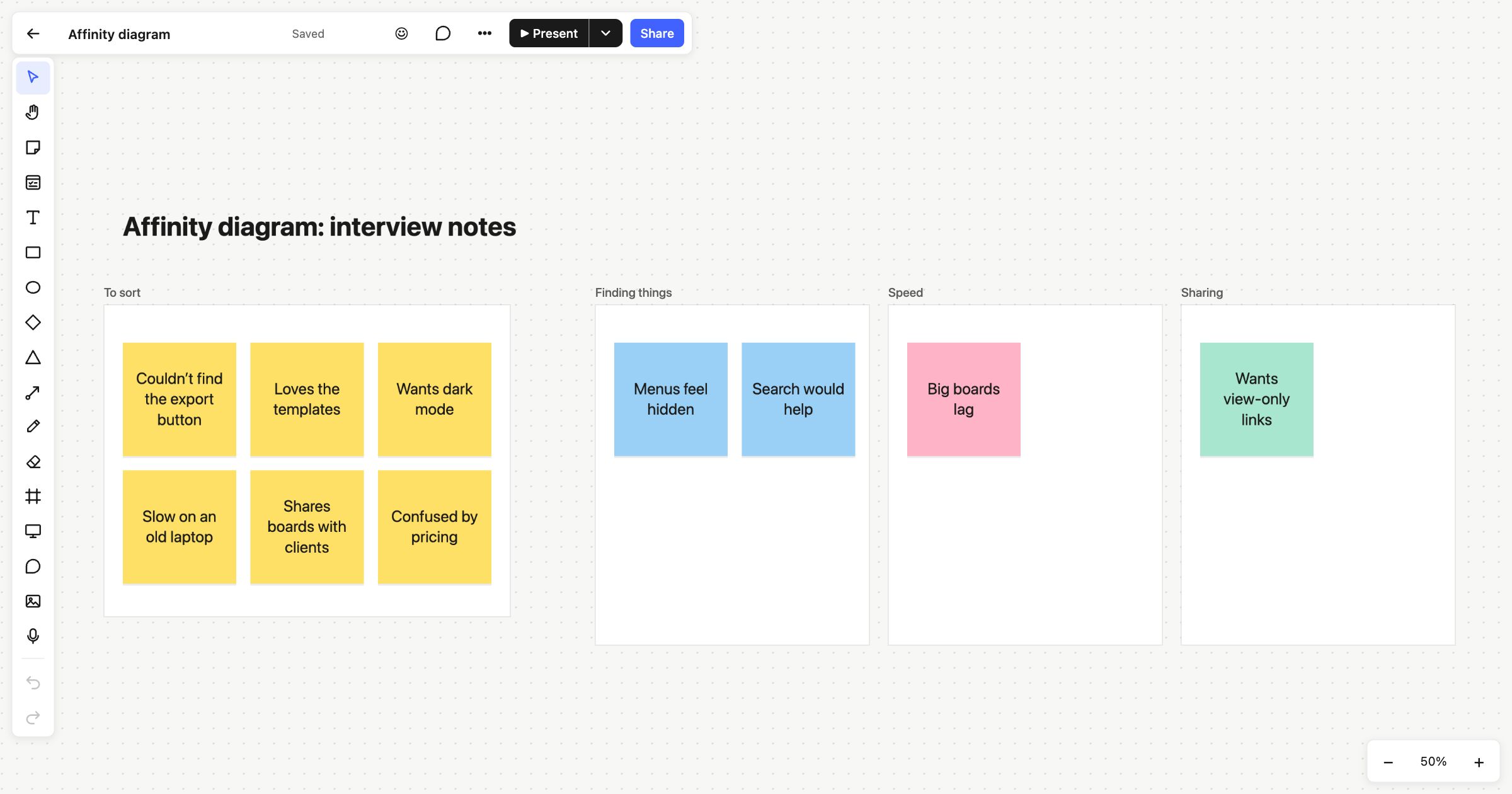 Affinity diagram
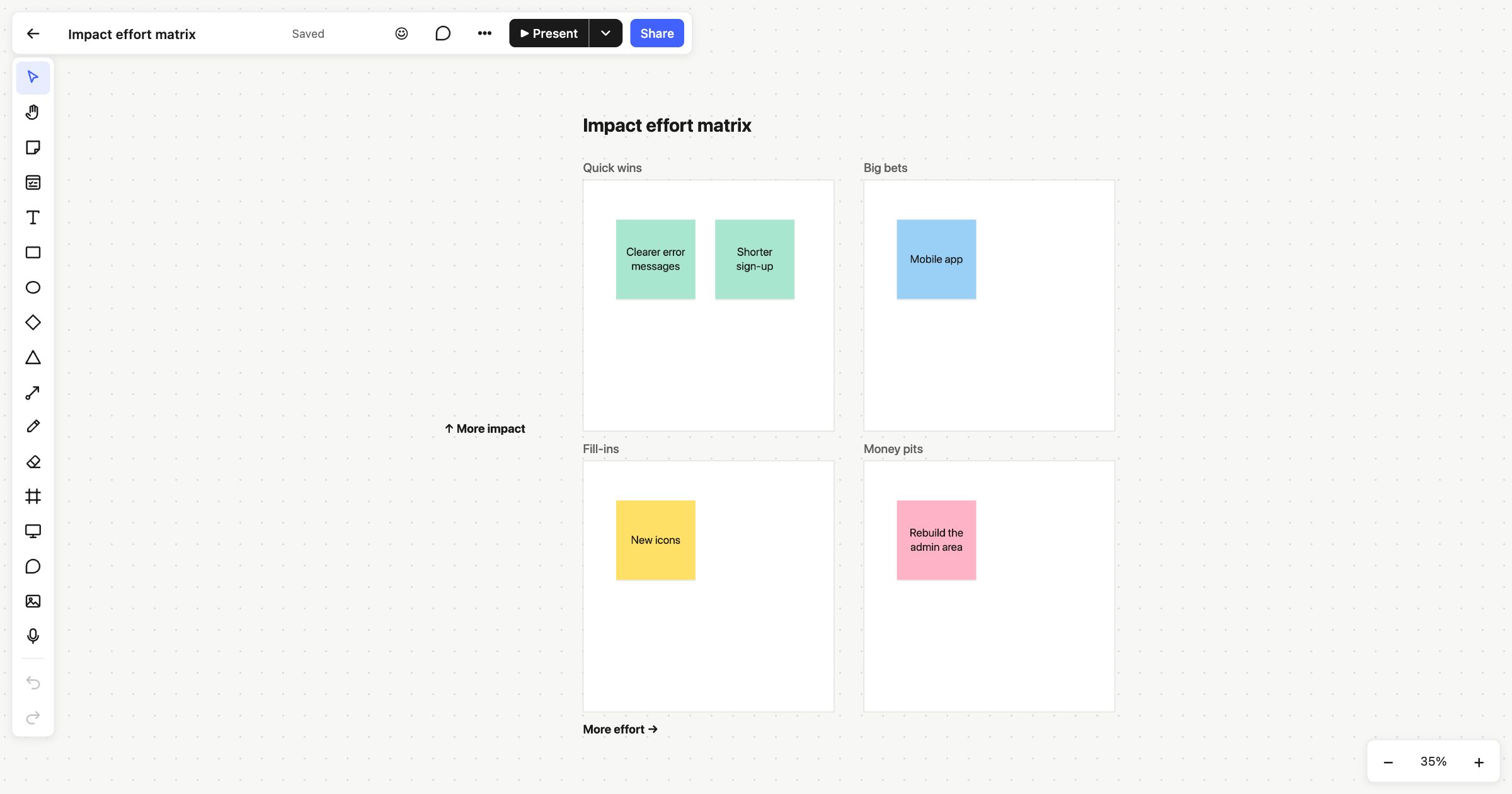 Impact effort matrix