
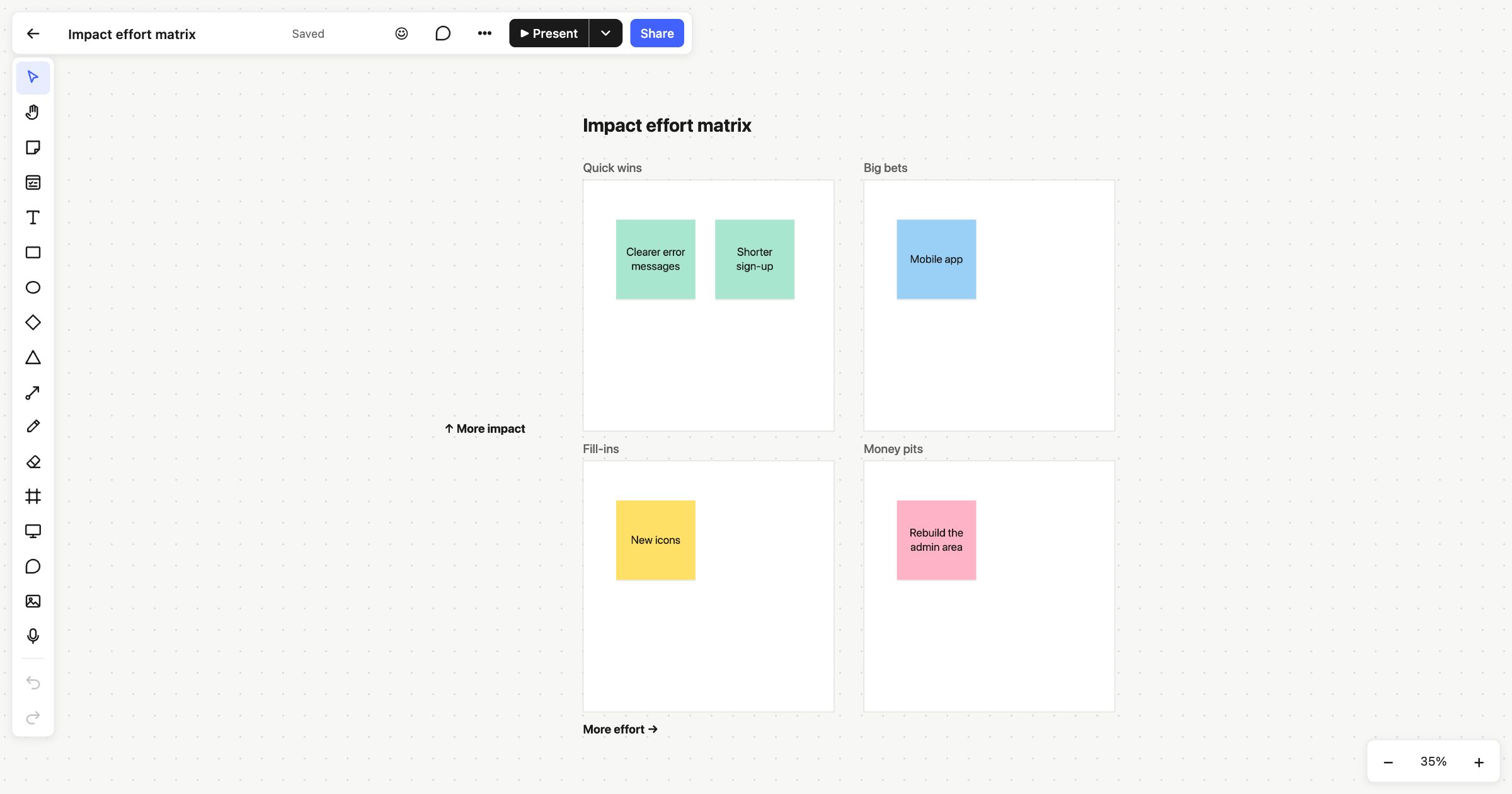
An impact effort matrix sorts ideas by two questions: how much difference will this make, and how much work will it take? The answers place each idea in one of four boxes, so the obvious choices stand out. It’s a quick prioritisation tool for product teams, workshop facilitators and anyone with more ideas than time.
When to use an impact effort matrix
- After a brainstorm or an affinity diagram, to decide which ideas to act on first.
- When planning a sprint or a quarter, and the backlog is longer than the time available.
- To settle a debate about priorities by making everyone’s assumptions visible.
- When you need to spot the expensive ideas that won’t pay off.
How to run it
- Gather the ideas (5 minutes). Put each one on a sticky note, to the side of the matrix.
- Agree what “impact” means (3 minutes). More revenue? Happier customers? Fewer support requests? Agree before you place anything.
- Place the notes (15 minutes). Take one note at a time and drag it into a box. Discuss briefly where people disagree. Don’t aim for precision; “more” or “less” is enough.
- Check the corners (5 minutes). Look at Quick wins first, then Big bets. Ask whether anything in Money pits is there out of habit.
- Decide (5 minutes). Pick the Quick wins to do now and the one or two Big bets worth planning properly.
What’s on the template
The board is titled “Impact effort matrix” and has four square frames in a two-by-two grid. Labels along the sides show the axes: More impact upwards and More effort to the right. So the four boxes are:
| Box | Impact | Effort |
|---|---|---|
| Quick wins (top left) | More | Less |
| Big bets (top right) | More | More |
| Fill-ins (bottom left) | Less | Less |
| Money pits (bottom right) | Less | More |
Each box has an example sticky note or two, like “Clearer error messages” in Quick wins and “Rebuild the admin area” in Money pits.
Tips
- Vote when you’re stuck. If the group can’t agree on a note, start a vote. Votes stay hidden until it ends, so each person decides for themselves.
- Turn decisions into work. Add a card for each Quick win, with a checklist and a person, next to the matrix or on a Kanban board.
- Leave a note on a note. Pin a comment to a sticky note to record why it went where it did.
Related templates: the Eisenhower matrix for personal priorities, the affinity diagram to group ideas first, and the product roadmap to plan what follows.
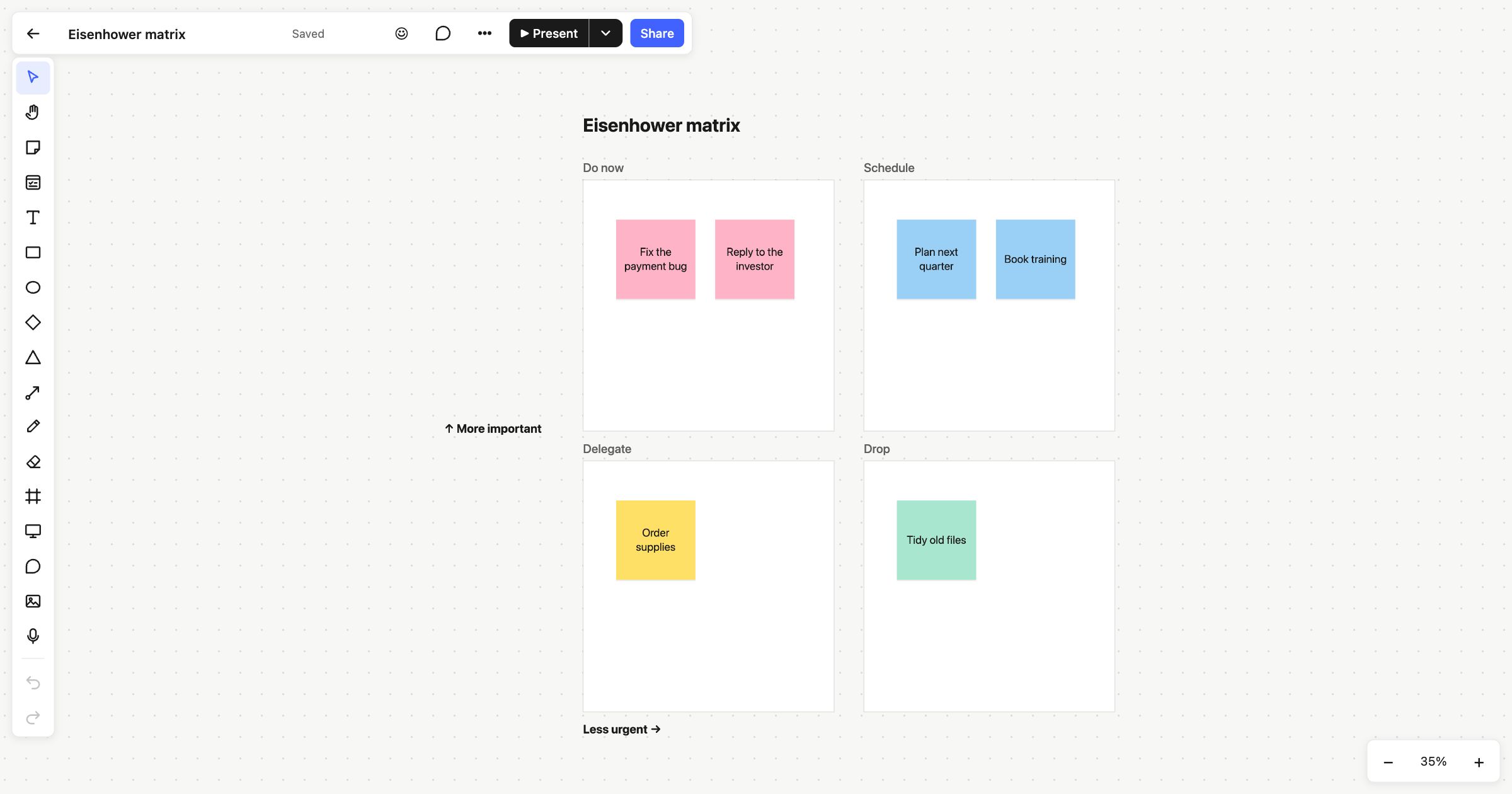 Eisenhower matrix
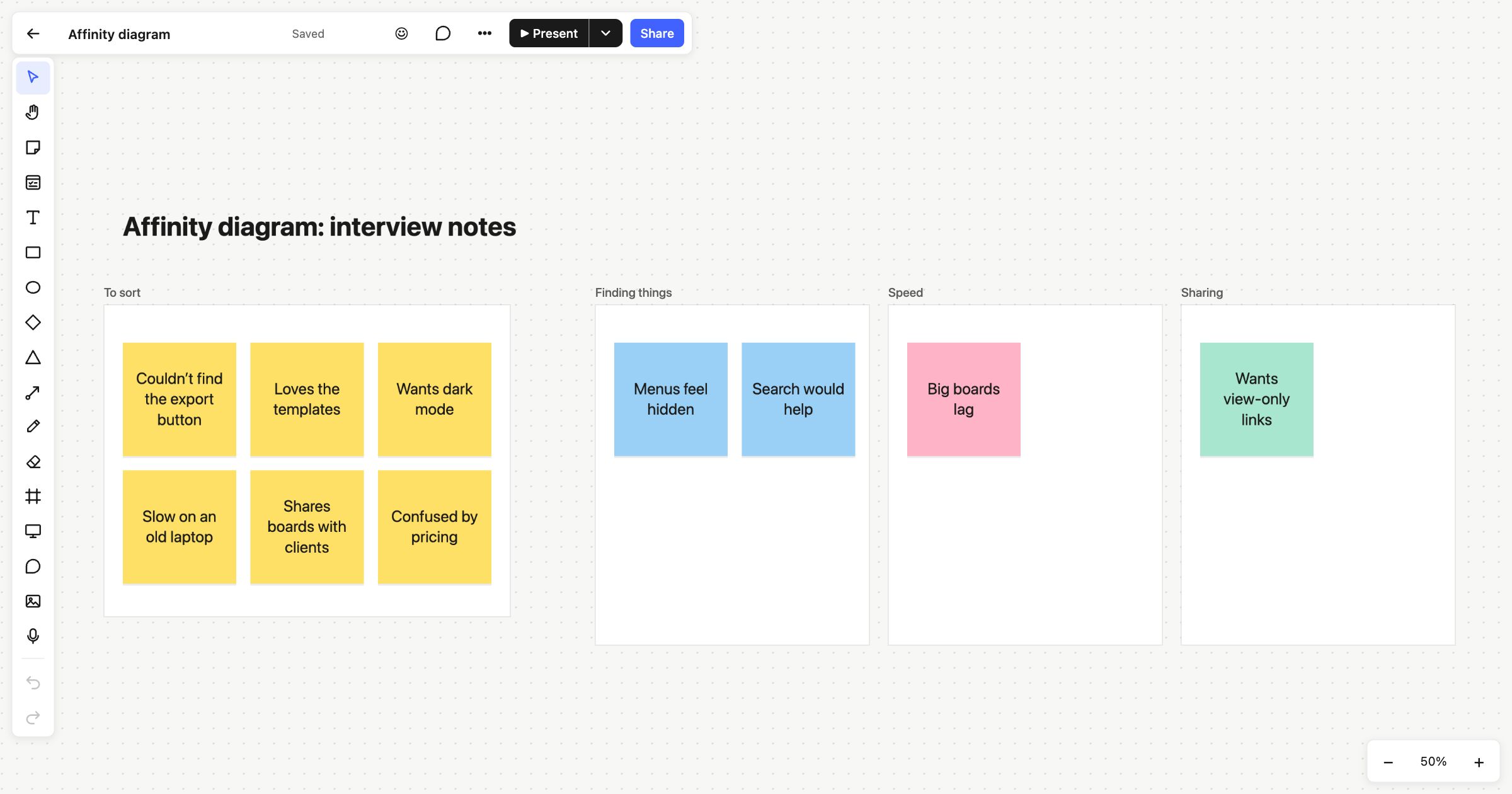 Affinity diagram
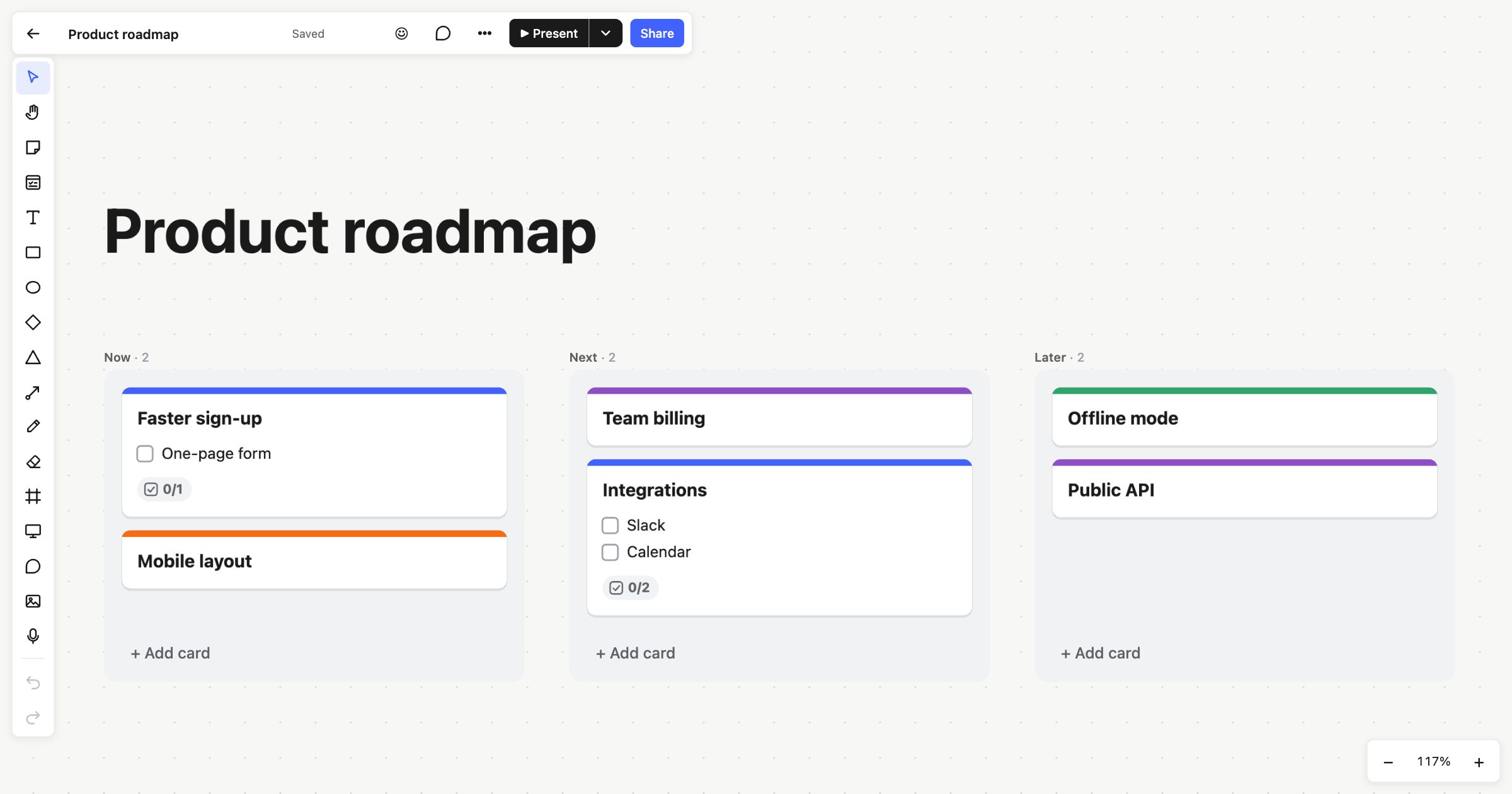 Product roadmap