
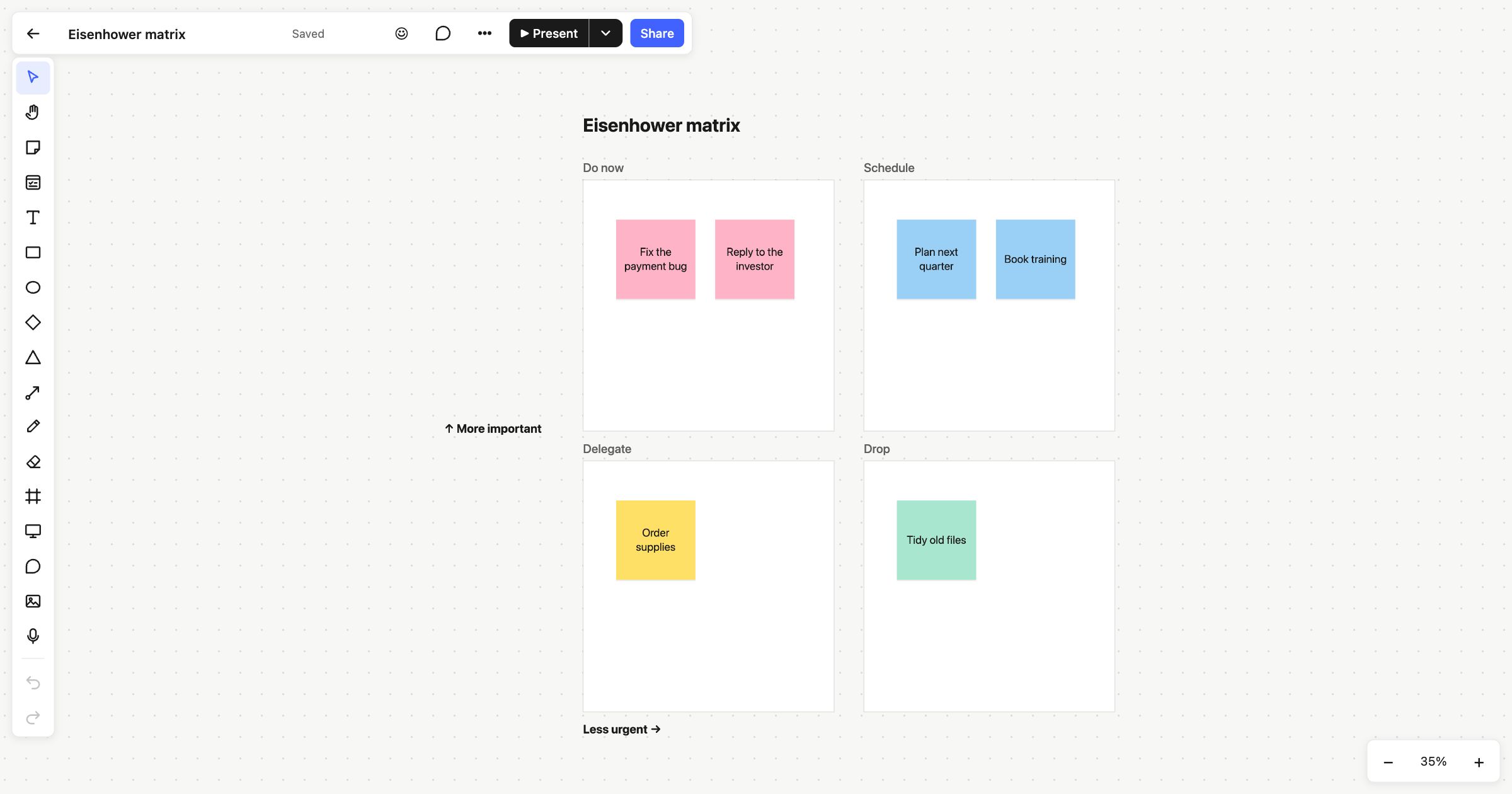
The Eisenhower matrix sorts tasks by whether they’re urgent and whether they’re important. Each task lands in one of four boxes, and each box tells you what to do with it: do it now, schedule it, delegate it or drop it. This Eisenhower matrix template is for anyone whose to-do list has grown past the point of being useful, whether that’s you on your own or a team deciding where its week goes.
When to use an Eisenhower matrix
- On a Monday morning, to decide what actually needs doing this week.
- When everything feels urgent and you need to see what really matters.
- Before handing work over, to find the tasks someone else could take.
- With a team, to agree what to stop doing.
How to run it
- Empty your head (5 minutes). Write every task on its own sticky note. Don’t judge them yet.
- Ask about importance (5 minutes). For each note, ask: does this move a goal forward? If yes, it goes in the top row.
- Ask about urgency (5 minutes). Does it need doing in the next day or two? If yes, it goes in the left column.
- Act on each box. Do the top-left tasks today. Put a date on the top-right ones. Hand the bottom-left ones to someone. Delete the bottom-right ones, or at least stop worrying about them.
- Repeat weekly. Tasks move between boxes as deadlines approach, so a ten-minute review each week keeps the matrix honest.
What’s on the template
The board is titled “Eisenhower matrix” and has four square frames in a two-by-two grid. A label up the left side reads More important, and one along the bottom reads Less urgent, so urgent and important work sits top left. The boxes are:
- Do now (pink), with “Fix the payment bug” and “Reply to the investor”.
- Schedule (blue), with “Plan next quarter” and “Book training”.
- Delegate (yellow), with “Order supplies”.
- Drop (green), with “Tidy old files”.
Replace the examples with your own tasks. Each frame has room for plenty more.
Tips
- Turn tasks into cards. A sticky note is fine for sorting. For work that needs steps, a person or a due date, add a card, which can hold a checklist. A due date turns red when it’s passed.
- Delegate on the board. Put someone on a card and they’ll see it in their My tasks list, across every board they can see.
- Keep a record. Every plan has version history, so you can look back at how last month’s matrix looked.
If you’re prioritising ideas rather than tasks, the impact effort matrix is a better fit. For ongoing work, move the “Do now” items onto a Kanban board, or plan the bigger pieces on a product roadmap.
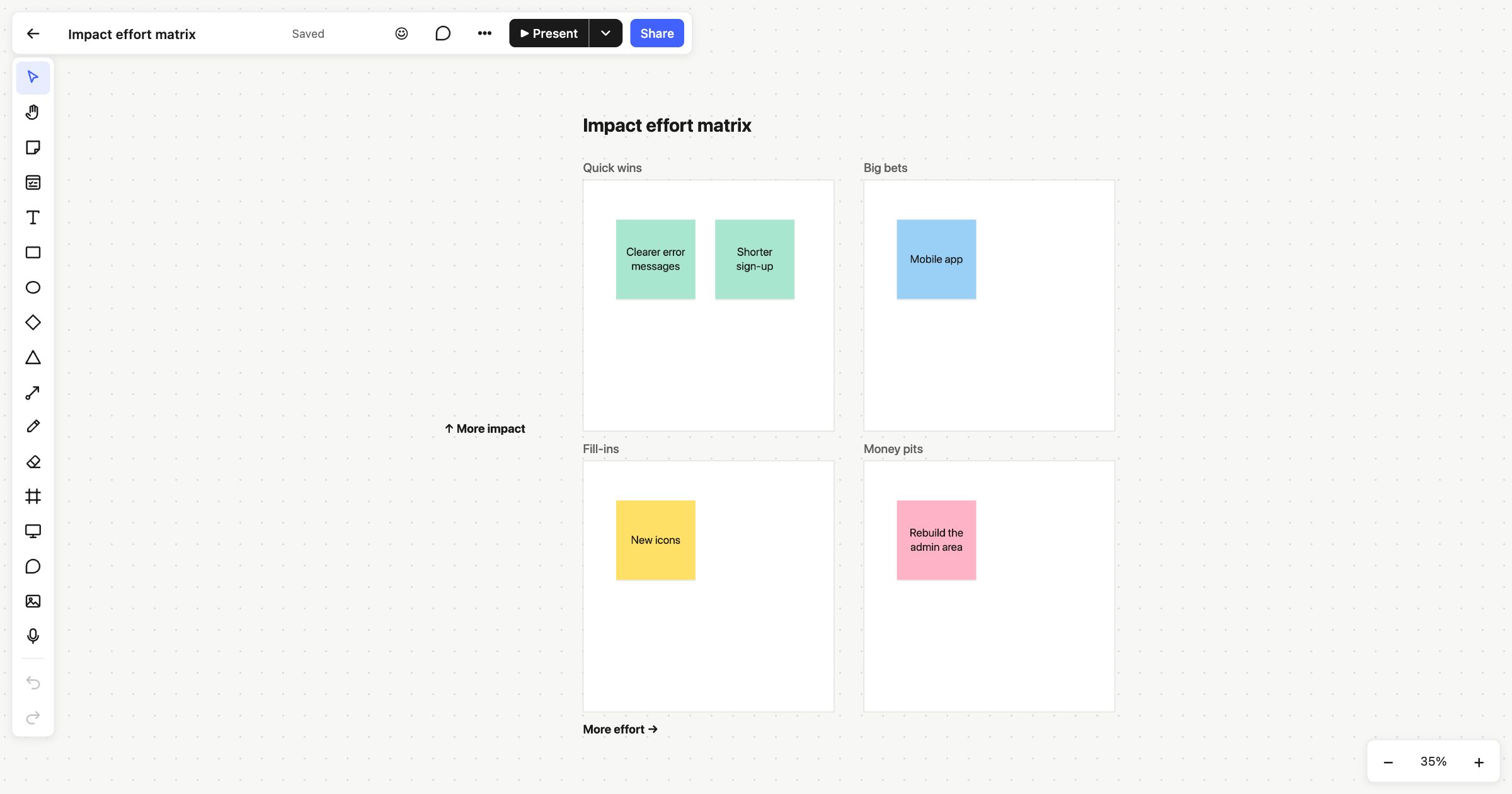 Impact effort matrix
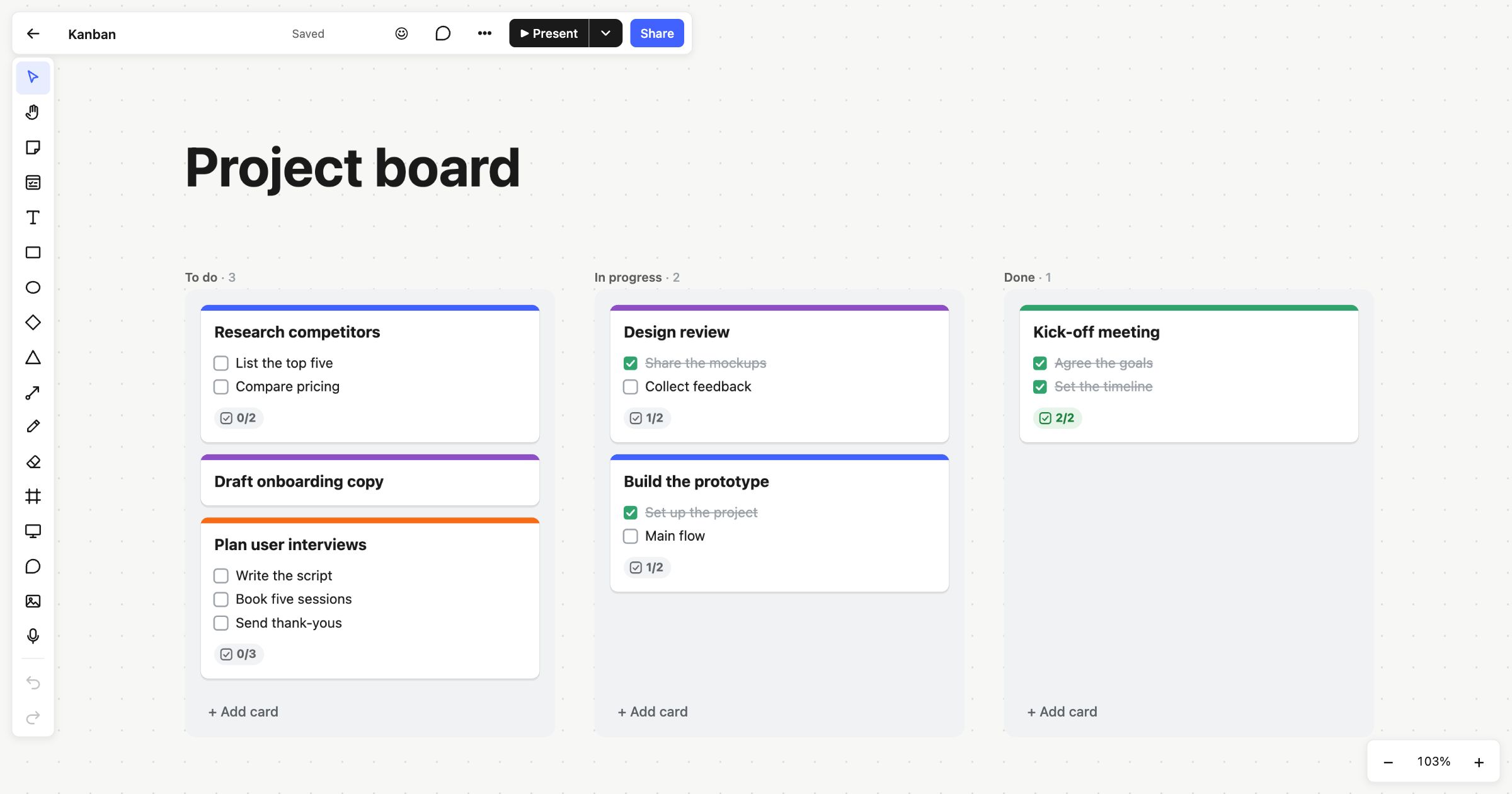 Kanban board
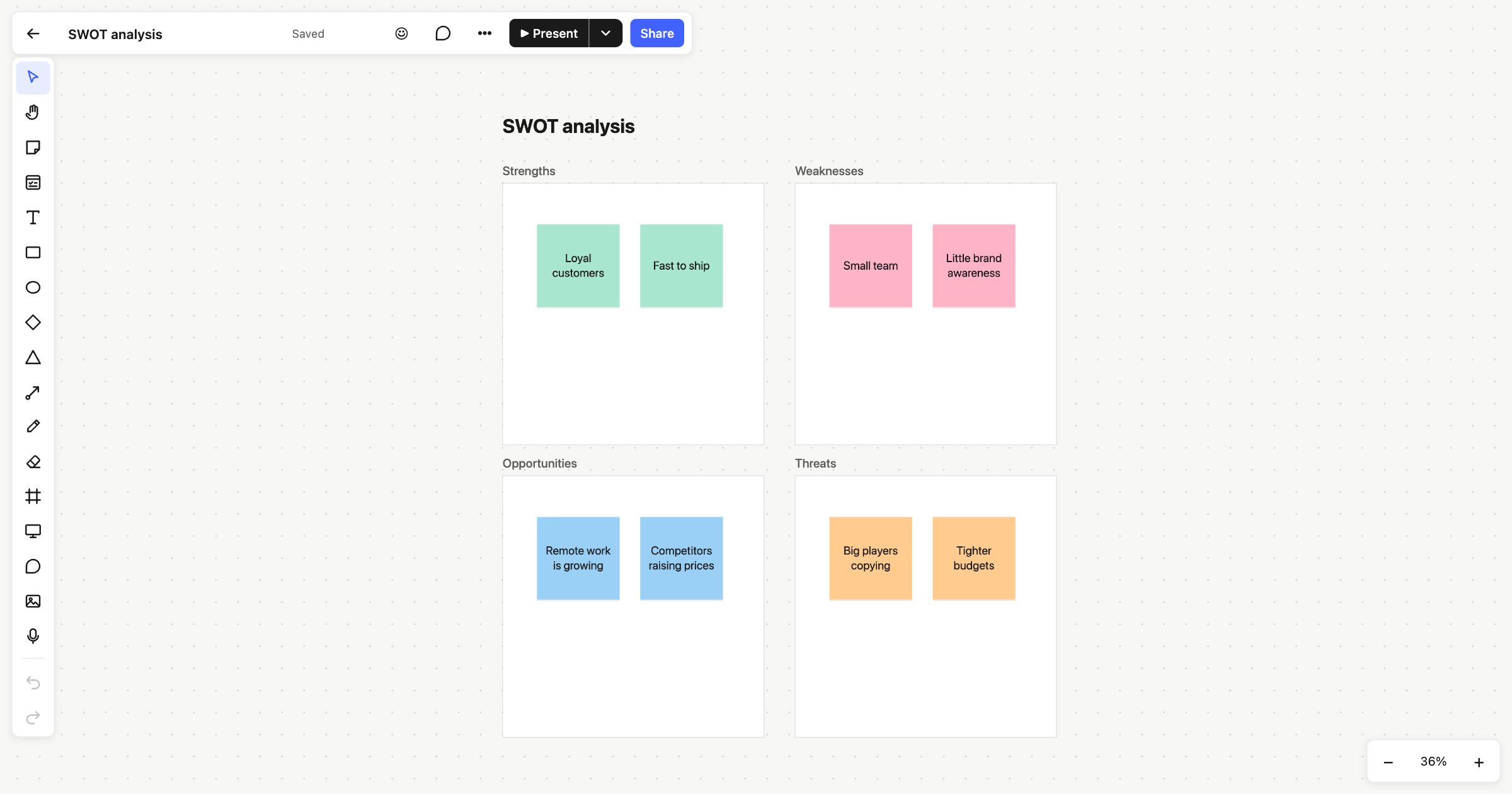 SWOT analysis