
An empathy map captures what one person says, thinks, does and feels. It helps a team move from “users” in general to a real person with real pressures. This empathy map template is for designers, product managers and researchers, and for anyone who wants their team to share the same picture of a customer before making decisions about them.
When to use an empathy map
- Straight after user interviews, while the details are fresh.
- At the start of a design project, to agree who you’re designing for.
- When a team keeps arguing about what users want, to put the evidence in one place.
- Before writing personas or a customer journey map.
How to run it
- Choose one person (2 minutes). A real interviewee or a specific type of customer. Name them and their role in the title, like “Sam, team lead”.
- Says (5 minutes). Write down things they actually said, in quotes. Use their words, not yours.
- Does (5 minutes). What did you see them do? Habits, workarounds, tools they use.
- Thinks (5 minutes). What might they be thinking but not saying? Mark these as guesses.
- Feels (5 minutes). What worries them, and what excites them?
- Look for tension (10 minutes). Where does what they say differ from what they do? These gaps are often where the best ideas are.
What’s on the template
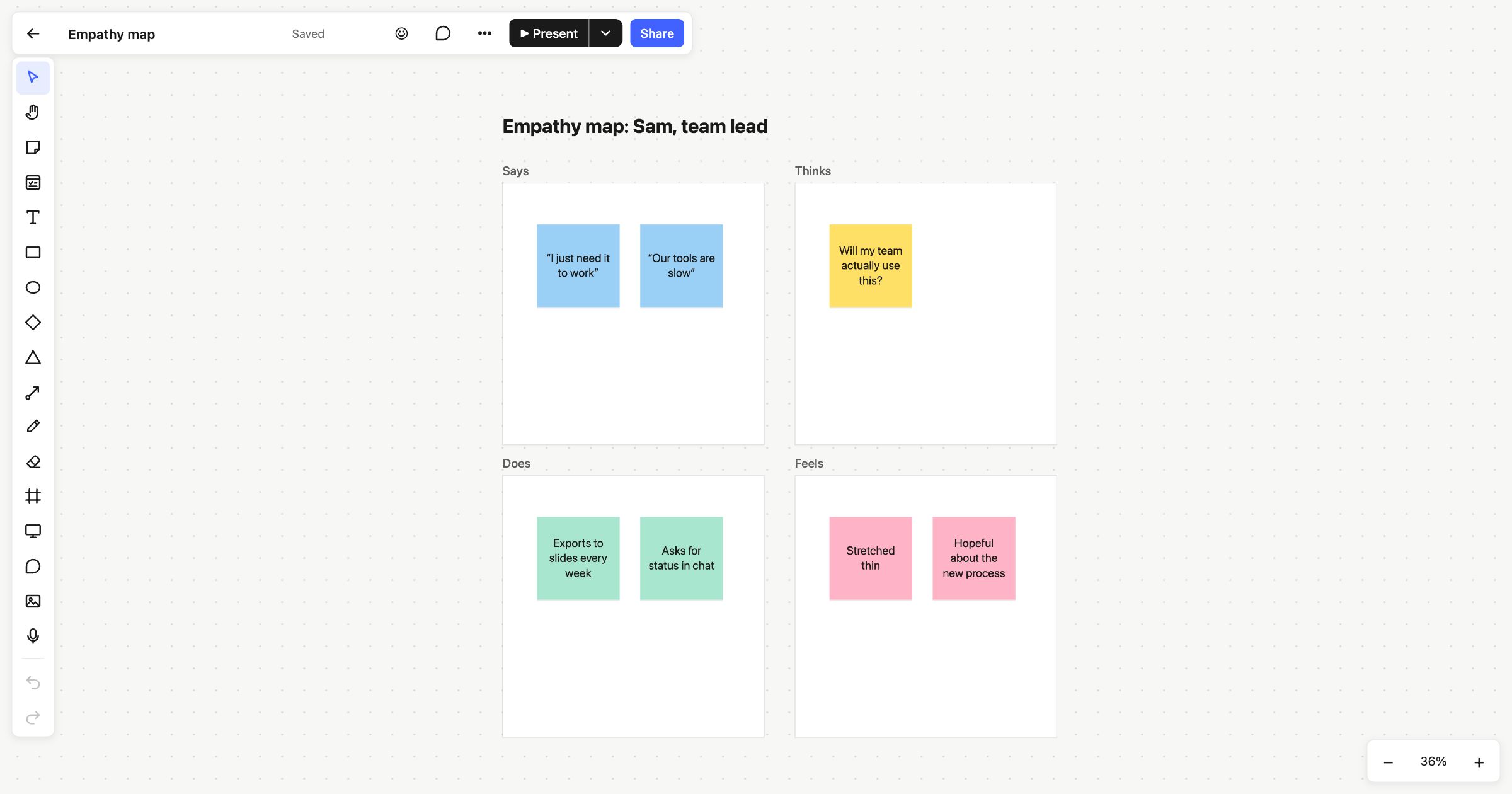
The board is titled “Empathy map: Sam, team lead” and has four square frames in a two-by-two grid:
- Says (blue): “I just need it to work” and “Our tools are slow”.
- Thinks (yellow): “Will my team actually use this?”
- Does (green): “Exports to slides every week” and “Asks for status in chat”.
- Feels (pink): “Stretched thin” and “Hopeful about the new process”.
The example shows how a few short notes build a picture of one person. Rename the title and replace the notes with your own research.
Tips
- Bring the evidence onto the board. Add images or audio clips beside the map, so the team can see or hear what you’re basing it on.
- Ask questions in place. Pin a comment to a note and @mention a colleague who was in the interview.
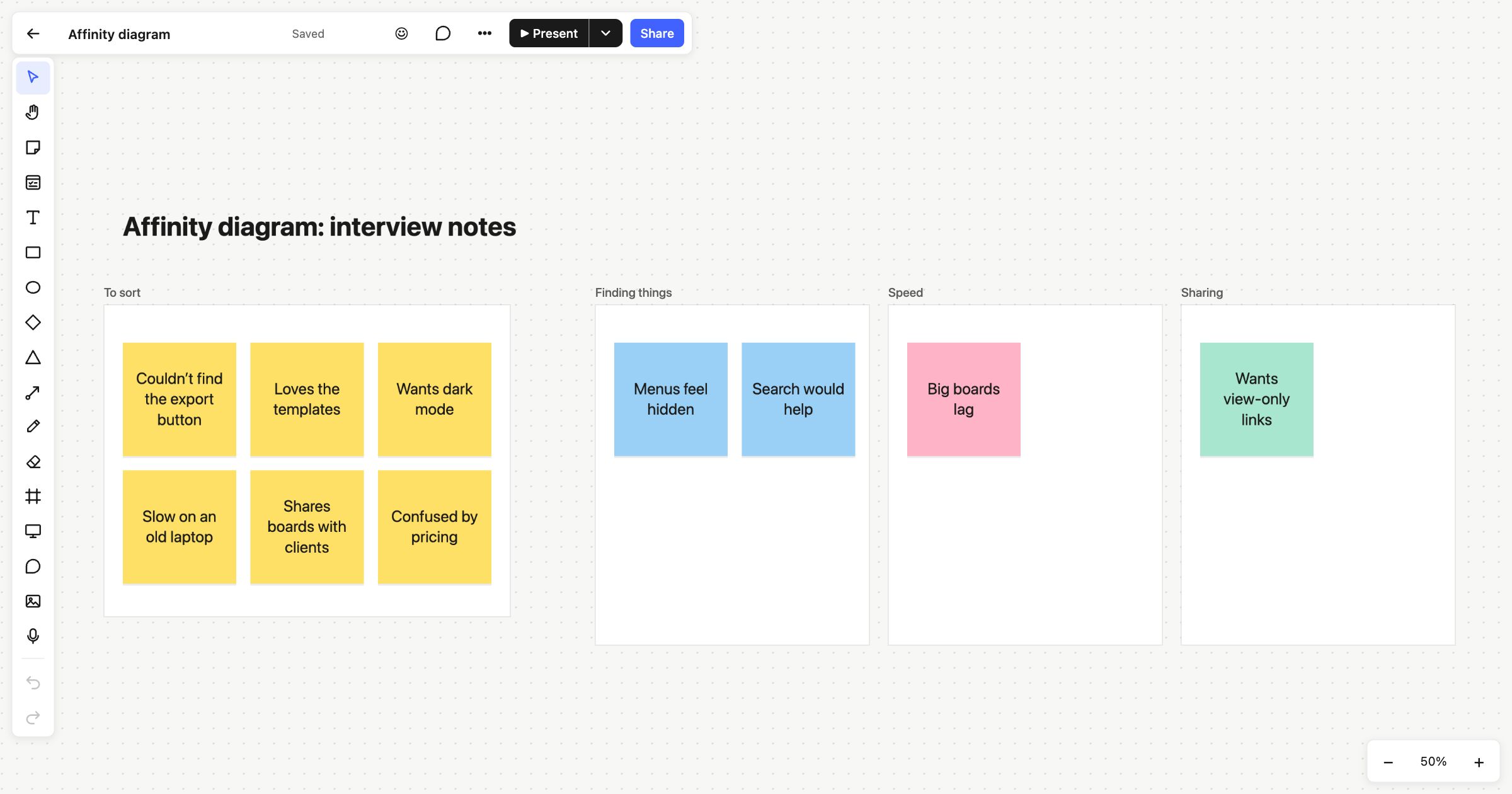
- Make one per person. If you interviewed five people, make five maps, then use an affinity diagram to find what they have in common.
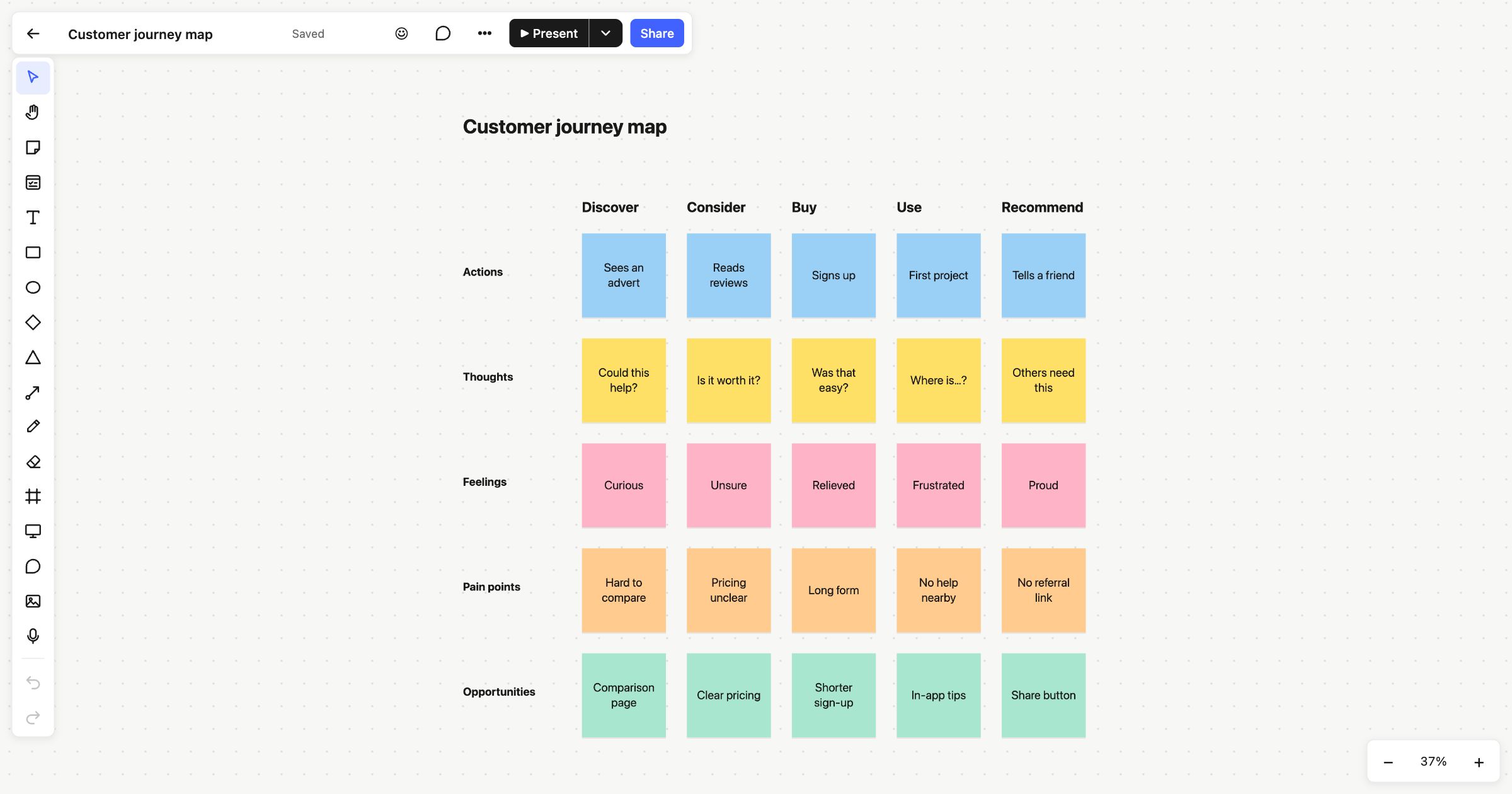
Next, follow the person through their experience with a customer journey map, or explore ideas for them with the brainstorming template.
 Customer journey map
 Affinity diagram
 Lean canvas