
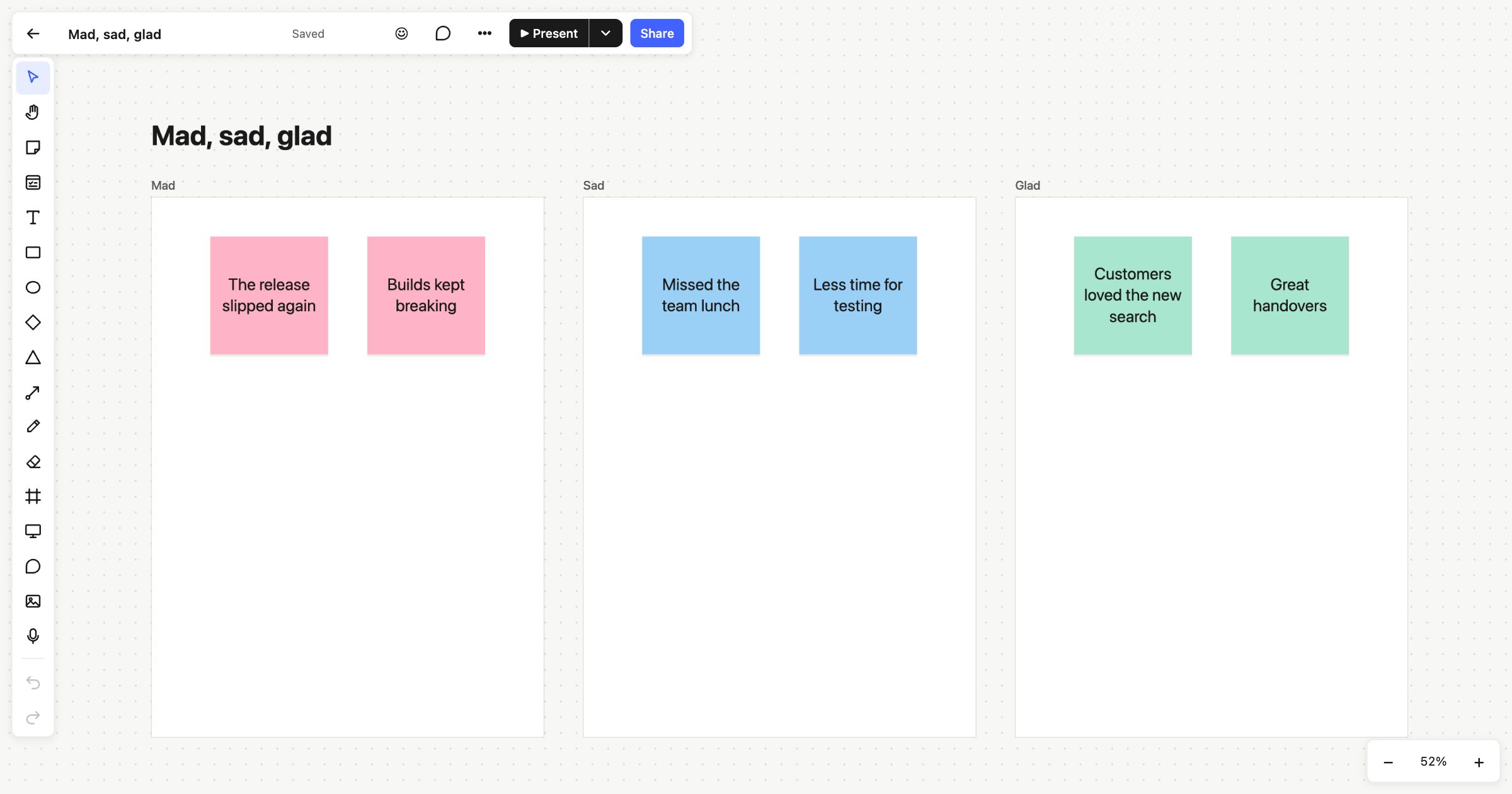
A mad sad glad retrospective asks how the last sprint felt, not just what happened. Everyone sorts their reactions into three columns: what made them mad, what made them sad and what made them glad. It suits teams who want to talk about morale and friction as well as process.
When to use a mad sad glad retrospective
- After a stressful sprint, or one where something went wrong and people need to say so.
- When your usual retro has gone stale and every meeting produces the same list.
- With a new team, as a gentle way to learn what matters to each other.
- When you suspect the problems are about people and pressure, not tooling.
If you want to focus on actions rather than feelings, start, stop, continue is a better fit.
How to run it
- Set the scene (2 minutes). Remind everyone the aim is to understand, not to blame. Agree the time period you’re looking back on.
- Write quietly (5 to 7 minutes). Each person adds sticky notes to the three columns on their own. One feeling per note. Silence helps people write what they actually think.
- Read through (10 minutes). Go column by column. The author reads each note out and adds a sentence of context if they want to. Move similar notes next to each other.
- Pick what to discuss (3 minutes). Vote on the notes that matter most, then sort by votes.
- Talk it through (15 minutes). Take the top two or three. For each “mad” or “sad”, ask what would have changed it. For each “glad”, ask how to keep it.
- Agree actions (5 minutes). Write each one down with an owner, ideally as a card with a due date.
What’s on the template
The board has a title, “Mad, sad, glad”, and three tall frames side by side: Mad with pink sticky notes, Sad with blue ones and Glad with green ones. Each column starts with two example notes, such as “The release slipped again” and “Customers loved the new search”, so people can see the kind of thing to write. Delete them, or leave them as a prompt. The frames have plenty of room below for more notes.
Tips
- Use the timer for the quiet writing. Editors can start a countdown everyone sees, and it chimes when time’s up.
- Vote before you talk. Start a vote and give each person three votes. Votes stay hidden until the vote ends, so nobody follows the crowd, and viewers can vote too.
- Keep the actions where you’ll see them. Put a card for each action beside the board, with a checklist and a person on it. Comments let people follow up on a note after the meeting.
For other ways to look back, try the sprint retrospective or the 4Ls retrospective, or see how comments keep the conversation on the board.
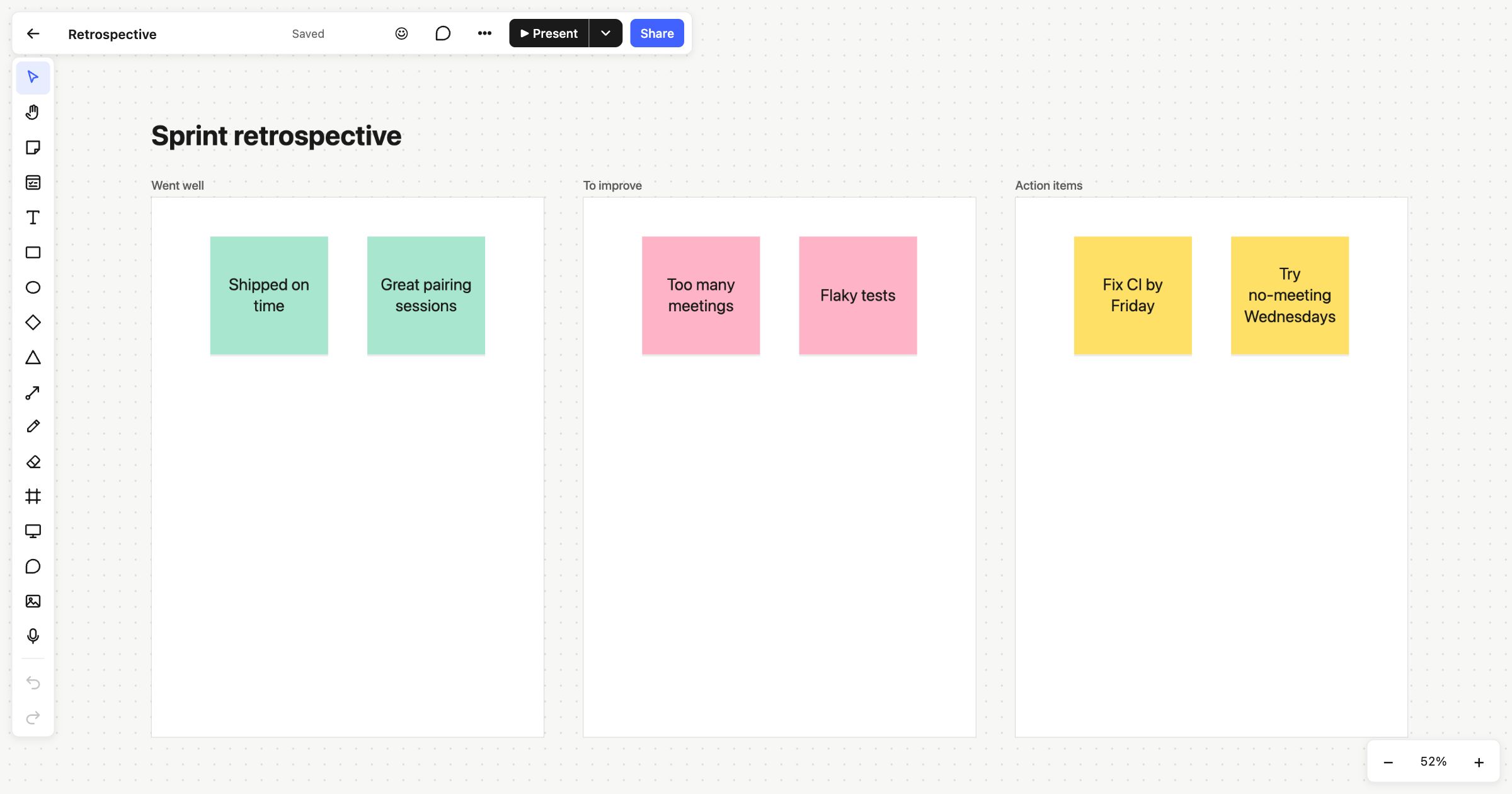 Sprint retrospective
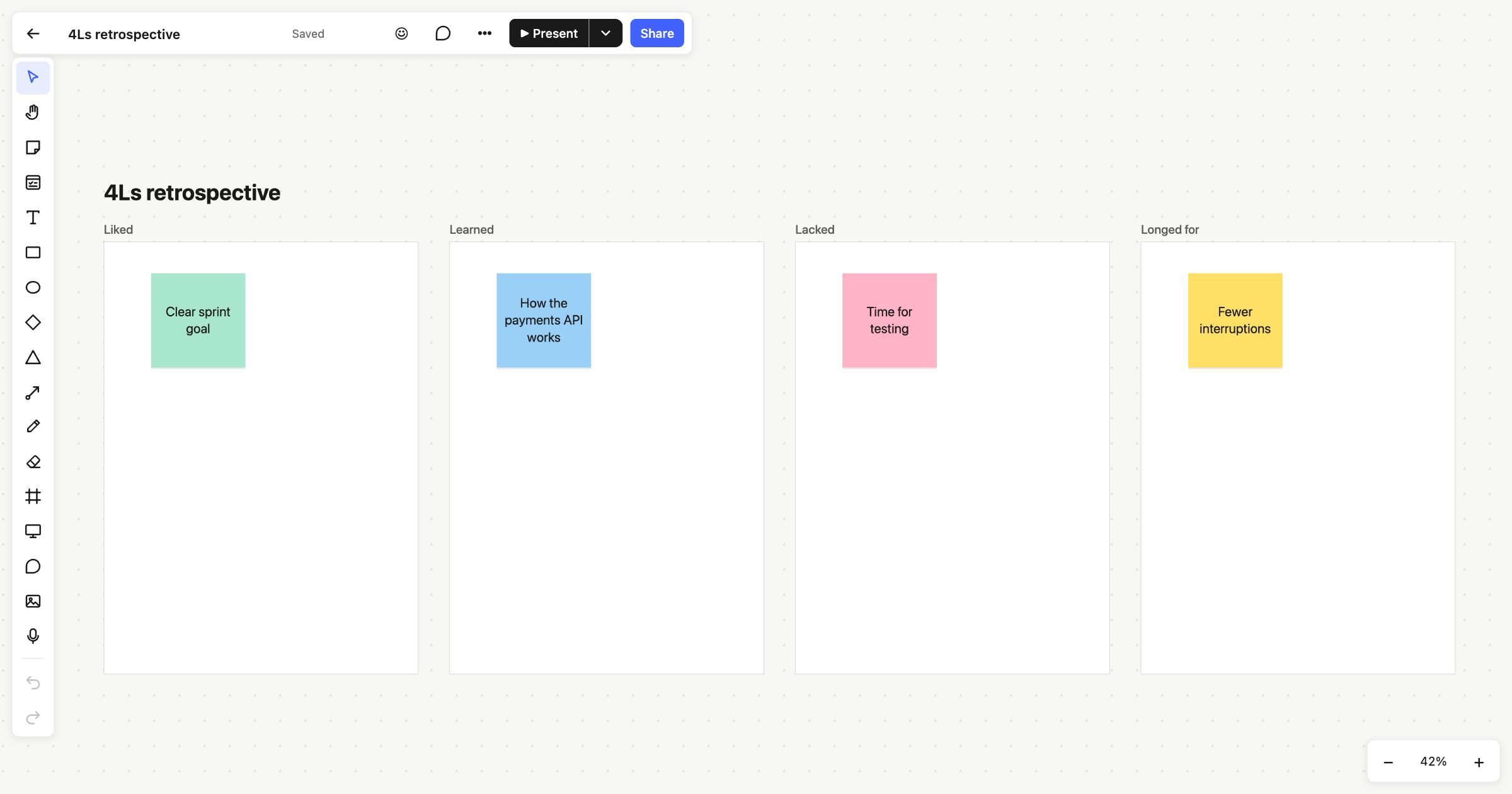 4Ls retrospective
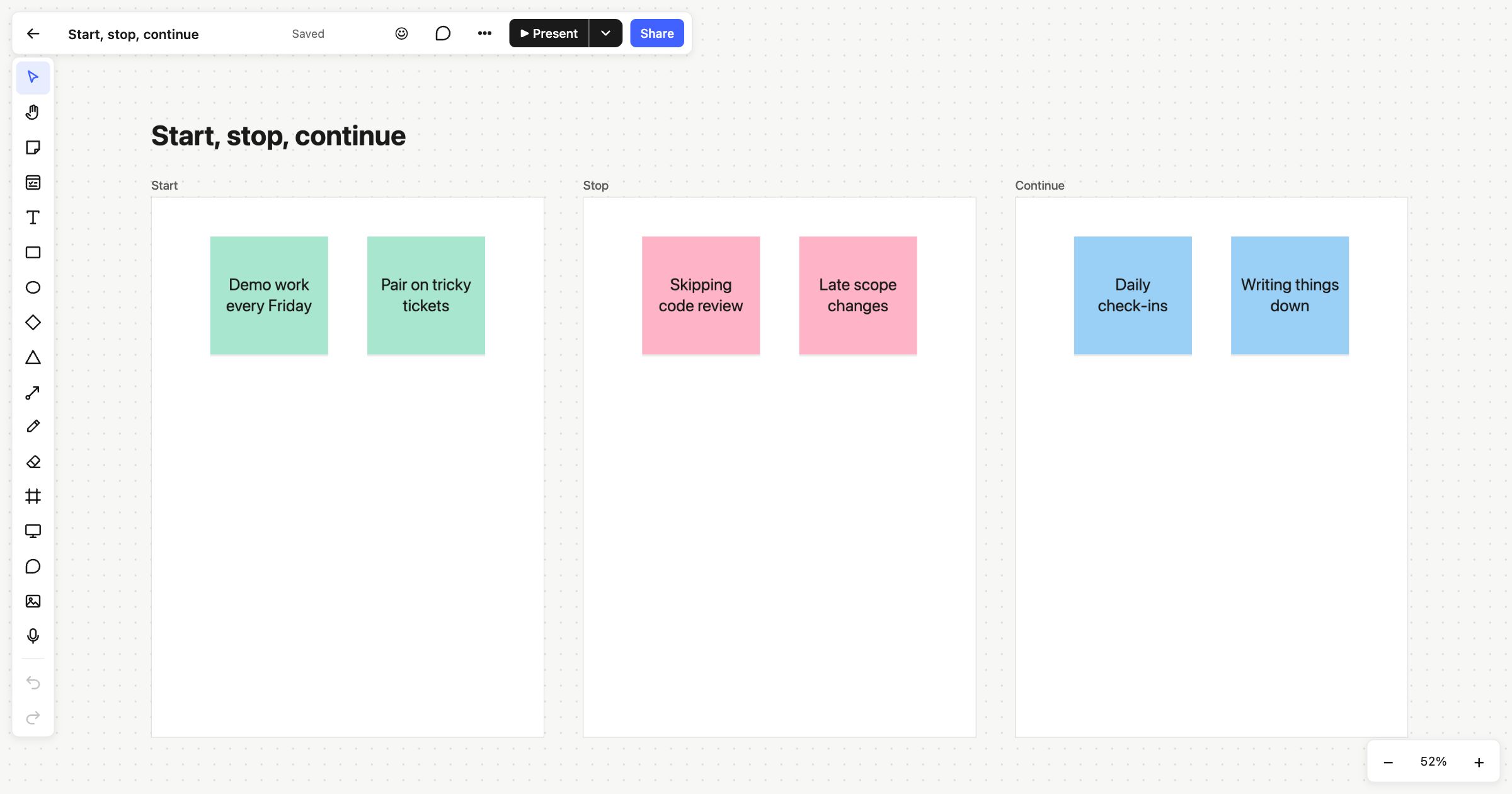 Start, stop, continue